
Pure Water, Pure Life
Reverse Osmosis Drinking Water Systems (Under-Sink RO)
Ditch the bottled water. Crisp, great-tasting drinking water at its own faucet, with no jugs to haul and less plastic in the house.
Licensed C55 contractor · CSLB #811243 · 30+ years · Family-owned since 1996
What you’ll notice
- No more bottled water runsno cases to haul, no jugs to swap
- Skip the delivery billdelivered water can cost a family a few hundred dollars a year (HomeGuide)
- Less plastic in the houseskip plastic bottles and polycarbonate jugs
- Reduces lead, arsenic & TDSand helps reduce microplastics and BPA
- Better coffee, tea & icecrisp-tasting water at its own faucet
Questions people ask about their drinking water
Is my tap water safe to drink?
Cities publish a water quality report every year, and most report meeting drinking water standards. Private wells aren’t tested by anyone but you. Many families still want an extra layer at the kitchen tap. Our free in-home test shows what’s in your water, and an RO system reduces lead, arsenic, nitrate and TDS in the water you drink.
Why does my water taste or smell bad?
Usually it’s chlorine or chloramine (chlorine combined with ammonia) from city disinfection, high TDS (a salty or bitter taste), or on a well, sulfur or iron. RO’s carbon stages reduce chlorine taste and odor, and the membrane reduces TDS, so your drinking water tastes crisp.
Is bottled water better than tap?
Not necessarily. A 2024 study found about 240,000 plastic particles per liter in bottled water [PNAS, 2024]. Some 5-gallon cooler jugs are made of polycarbonate, a plastic made with BPA [FDA: BPA in food contact applications]. Delivered water can also cost a typical family a few hundred dollars a year [HomeGuide: water delivery cost]. An RO faucet gives you filtered drinking water at the sink, without the jugs.
What’s in my water: lead, arsenic, microplastics?
Only a test can tell you what’s in your water. An RO system reduces lead, arsenic, nitrate and TDS, and helps reduce microplastics and BPA in the water you drink. Contaminants listed are not necessarily present in your water.
An under-sink reverse osmosis system, usually called an RO system, gives you a separate faucet at your kitchen sink for cleaner drinking and cooking water. RO pushes water through a very fine membrane that reduces total dissolved solids (TDS, the minerals and salts dissolved in water) and a long list of contaminants. It's the drinking-water step that works alongside a water softener, a salt-free system, or a whole-house filter. Liquid Solutions Inc installs and services RO systems in Manteca, Stockton, Patterson, Lathrop, Hughson, Ripon, Turlock and Modesto. We're a licensed C55 water conditioning contractor (C55 is California's water conditioning contractor license; CSLB #811243) with 30+ years of experience, family-owned since 1996. We start with a free in-home water test that checks hardness, chlorine, TDS and more, so we can recommend the right system for your home.
Pure water on tap, all year long
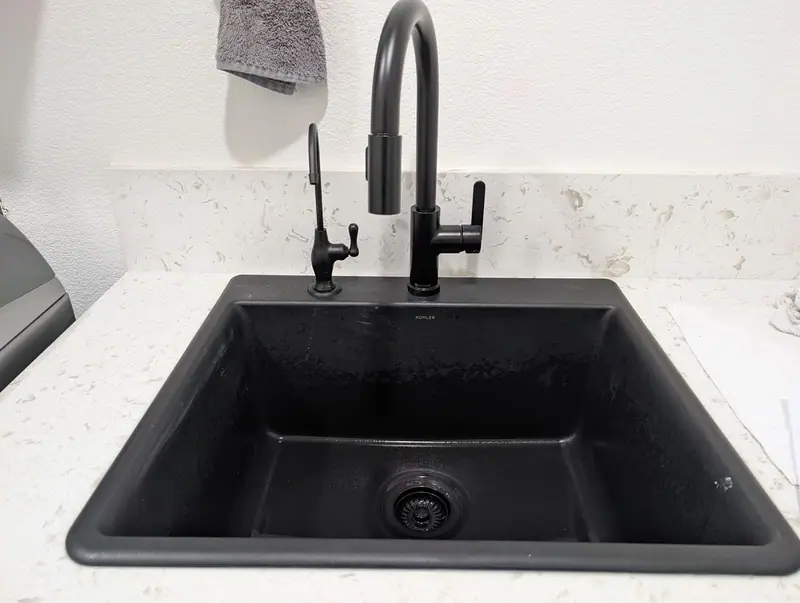
- Up to 33 gallons a day of fresh, great-tasting water, right from its own faucet at your kitchen sink.
- No more hauling cases of bottled water or refilling jugs at the store. That saves time and plastic, and delivered water can cost a typical family a few hundred dollars a year (HomeGuide).
- Less plastic in your water, too. A 2024 study found about 240,000 plastic particles per liter in bottled water (PNAS). RO reduces lead, arsenic and TDS, and helps reduce microplastics and BPA in the water you drink.
- Better coffee, tea, ice, soups and baby formula, plus clean water for pets, plants and aquariums.
- A streak-free, all-purpose cleaner. RO water has almost no minerals, so it leaves windows, mirrors, glass and stainless steel with almost no water spots, much like a store-bought glass cleaner. Want extra cleaning power? Mix in rubbing alcohol (70% isopropyl helps disinfect) or white vinegar. Add a few drops of natural essential oil for fragrance. You save money, skip harsh chemicals, and never run out mid-cleaning.
- Quick, sanitary filter changes with sealed cartridges, and we track the schedule for you.
We confirm what your water needs with testing and check your results after installation.
Does RO water have minerals? What about alkaline water?
Very few. The RO membrane takes out most dissolved minerals along with the contaminants, which is a big part of why RO water tastes so clean and crisp. It also means you’re drinking the same consistent water every day, instead of whatever minerals happen to be in the supply that week.
If you’d like some minerals back, we offer an optional remineralization (alkaline) add-on we can install after the RO membrane. It’s a separate cartridge, not part of the PureGen Pro Q+ system itself. It adds back a small, controlled amount of calcium and magnesium, minerals your body uses. They’re electrolytes, which is nice for people who work out or sweat a lot. Many people like the taste, and it raises the water’s pH so it’s slightly alkaline.
It’s about taste and adding minerals back. It isn’t a medical treatment, and we don’t claim alkaline water treats or prevents anything. Ask about it at your free water test.
How an RO system works
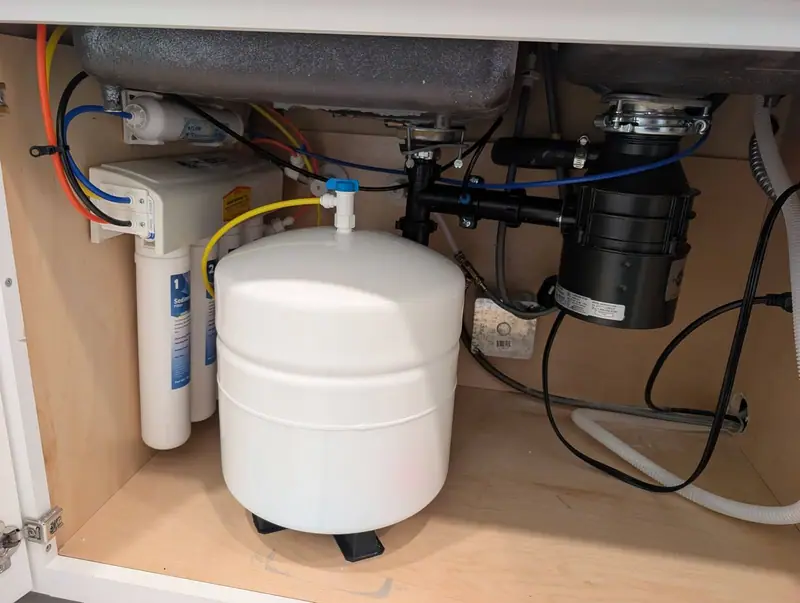
A typical under-sink reverse osmosis (RO) system has three parts working in stages:
- Pre-filters (sediment and carbon) catch dirt and reduce chlorine, which protects the membrane.
- The RO membrane separates water from dissolved salts, metals and other contaminants. The rejected water carries them down the drain.
- Post-filter and storage. The finished water is polished for taste and stored in a small tank (or sent straight to the faucet on tankless models) until you open your RO faucet.
The most thorough drinking water filtration for your home
Reverse osmosis is the gold standard for home drinking water. Our AquaShield 5500, built on the PureGen Pro Q+, uses a 4-filter, 5-stage design with a thin-film composite (TFC) membrane that filters particles down to 0.0002 microns, far smaller than bacteria and viruses. Its stages are designed to reduce a long list of contaminants:
- Nitrates, a top concern for Central Valley wells
- Arsenic, lead, copper, mercury, barium and uranium
- Can potentially reject bacteria, viruses and cysts. RO isn't a replacement for UV disinfection on contaminated well water. If a test shows bacteria, see bacteria, E. coli & Giardia in well water
- Pesticides, DDT and PCBs
- VOCs (volatile organic compounds) and THMs (byproducts of chlorine disinfection)
- Sodium, total dissolved solids (TDS, the minerals and salts you can taste) and fluoride
- Reduces chromium-6 (hexavalent chromium). According to the California State Water Board, "RO is a mature and viable technology for hexavalent chromium removal" (State Water Board, Hexavalent Chromium MCL Initial Statement of Reasons). Ask us about a free water test.
- Reduces PFAS ("forever chemicals"). According to the U.S. EPA, "High-pressure membranes, such as nanofiltration or reverse osmosis, have been extremely effective at removing PFAS" (EPA: Reducing PFAS in Drinking Water with Treatment Technologies). See PFAS in Central Valley water
- Chlorine taste and odor, algae, asbestos, radon and more
Contaminants listed are not necessarily present in your water.
Why Central Valley homeowners add RO
Our cities' water reports describe a few common reasons people want a dedicated drinking-water tap:
- Manteca has a documented history of 1,2,3-TCP (trichloropropane, a contaminant linked to past farm fumigant use) in its wells. Municipal treatment has improved, and many residents still choose RO at the kitchen tap. Manteca
- Hughson city wells have had arsenic and TCP notices. Hughson
- Patterson has had chromium notices, along with very hard water. Patterson
- Stockton uses chloramine (chlorine plus ammonia) for disinfection, and Turlock's water report highlights its chlorine residual. Some people can taste both. Stockton Turlock
- Private wells around Ripon, Hughson, Patterson and Turlock can carry nitrate from farm runoff and septic systems. Nitrate removal
Cities report compliance with drinking water standards. RO is for families who want an extra layer at the tap, matched to their own test results.
RO with a softener, salt-free system, or whole-house filter
RO treats the water you drink. Whole-home systems treat everything else. Pairing them helps both: soft or conditioned water protects the RO membrane, and RO polishes the drinking water. Common setups:
What to expect at your free water test
We come to your home and test your water at the tap. The free in-home test includes hardness, precipitation, chlorine and soap testing, and more. We explain the results in plain language and tell you whether RO makes sense for your home. For private wells, we also offer specialized well testing on site and through state-certified labs for contaminants like nitrate and arsenic. You get a written, no-pressure estimate, and we only recommend what your results call for. Water testing
Filter changes and service
RO systems need regular pre-filter, post-filter, and membrane changes to keep performing. We install it, set your filter schedule, and service the systems we install. If your RO water starts tasting off or flowing slowly, call us.
What RO saves you vs. bottled water
Delivered 5-gallon water typically costs $7 to $10 per bottle, and plans with 3 to 5 bottles a month run about $30 to $60 [HomeGuide: Water delivery cost].
Example: a household that uses 4 five-gallon bottles a month (20 gallons) at $7 to $10 per bottle spends about $28 to $40 a month, or $336 to $480 a year, before delivery fees, deposits or dispenser rental. Example usage only; your household will vary.
With reverse osmosis, that water comes from your own kitchen tap. Even with yearly service included, RO drinking water costs less than that bottled-water example, and the more bottled water your household buys now, the bigger the difference.
And beyond the money: no hauling jugs, no running out, and confidence in every glass.
Reverse osmosis FAQs
How much does an RO system cost installed?
It depends on the system and your water. We give you a no-pressure estimate after your free in-home water test. Call (209) 523-5921.
How long does an RO system last?
Reverse osmosis (RO) systems usually last 10–15 years, with filters and the membrane replaced on schedule.
Does reverse osmosis remove nitrate?
RO can reduce nitrate, though less effectively than whole-house anion exchange, our primary method for nitrate. RO is typically an under-sink option for drinking water. We test your water first and check your results after installation.
Does reverse osmosis remove fluoride?
Yes, RO membranes reduce fluoride along with other dissolved minerals.
Does an RO system waste water?
RO sends some water down the drain to carry away what the membrane rejects. Pre-treating hard water with a softener or salt-free system helps the system run efficiently.
Does RO water have minerals? What about alkaline water?
Very few; the membrane takes most dissolved minerals out, which is why RO water tastes so crisp. We offer an optional remineralization (alkaline) add-on, separate from the PureGen Pro Q+ system, that adds back a small, controlled amount of calcium and magnesium. Those minerals are electrolytes your body uses. It’s for taste and minerals; we make no health claims about alkaline water.
Does reverse osmosis remove PFAS?
RO reduces PFAS. According to the U.S. EPA, "Research shows that these types of membranes are typically more than 90 percent effective at removing a wide range of PFAS, including shorter chain PFAS" (EPA: Reducing PFAS in Drinking Water with Treatment Technologies). That's research on membrane treatment in general, not a certification of any one home system. Ask us about a free water test, and see our PFAS page for local numbers.
Can I put RO on my whole house?
Whole-house RO is uncommon for homes. Most families use a whole-house filter or softener for every tap and an under-sink RO system for drinking water.
Free Water Test + RO Estimate. Call (209) 523-5921 (office / scheduling) or (209) 645-1151 (sales). Licensed C55 contractor · CSLB #811243 · 30+ years · Family-owned since 1996.
Built to last: Systems hand built in the USA with NSF-certified components. According to PureGen, the system's manufacturer: "many of the products that we carry are certified to the strictest NSF standards" (PureGen: About Us). Financing available, including 0% for 21 months on approved credit (OAC). See terms (opens in a new tab) Service: year-to-year service, or a service plan with service discounts and extended labor warranties.
Our Promise: we test before and after installing and adjust free until your results match · the same family-owned team from test to service · free test, written estimate, no "today only" pricing.
NSF certification applies to individual components, not the complete system.
Compare our core systems
Free water test / estimate
We reply during business hours (Mon–Fri, 9 AM–4 PM). Prefer to talk? Call (209) 523-5921.
Why book with us
- Licensed
- Bonded
- Workers' comp
- Liability
- Family-owned since 1996
- CSLB #811243
Office: (209) 523-5921
Sales: (209) 645-1151
Text: (209) 821-4777
Free Water Test + No-Pressure Estimate
Call (209) 523-5921 (office / scheduling) or (209) 645-1151 (sales), text (209) 821-4777, or message us online.
Contact Liquid Solutions Inc ★ Leave Us a Review