
Pure Water, Pure Life
TCP in Drinking Water: Clear Answers at Your Tap
TCP shows up in city reports and well conversations across the Valley. You can’t taste it. We test first, explain your options clearly, and size drinking-water treatment when it fits.
Licensed C55 contractor · CSLB #811243 · 30+ years · Family-owned since 1996
Licensed · Bonded · Workers' comp · Liability · 30+ years · Family-owned since 1996 · CSLB #811243
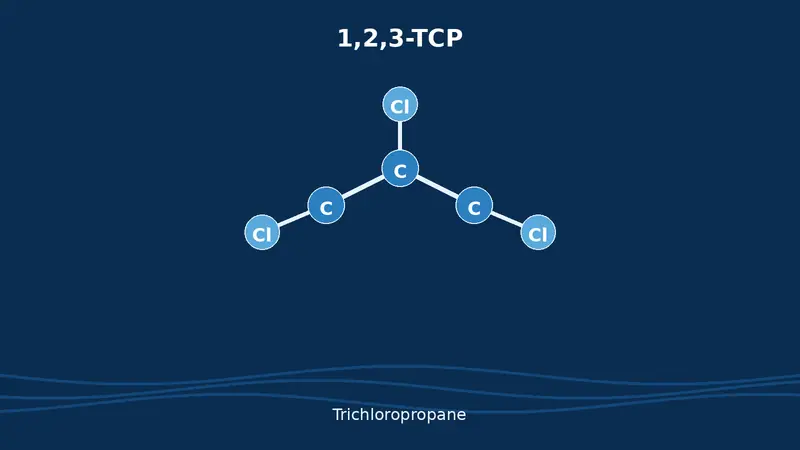
TCP is short for 1,2,3-trichloropropane, a chemical that turns up in Central Valley groundwater conversations — city notices, Consumer Confidence Reports, and questions from neighbors who want to know what it means for the kitchen sink. You can’t see it, taste it or smell it. The useful response isn’t fear; it’s a clear read of your water and a practical plan.
Liquid Solutions Inc helps families in Manteca, Lathrop, Stockton, Hughson, Turlock, Patterson and Modesto sort TCP questions the same way we handle other problem water: test first, explain the results without scare tactics, and recommend only what your home actually needs. When families want cleaner, better-tasting drinking and cooking water, reverse osmosis with carbon stages is often part of that conversation.
Signs of TCP
There aren’t any sensory signs at the tap. TCP has no taste, color or smell. Families usually learn about it from:
- A line in the annual Consumer Confidence Report
- A public notice or compliance update from the city
- A private-well lab panel
If you’ve seen TCP mentioned and aren’t sure what to do next, start with your latest report and a conversation about testing — not with a product pitch.
The limit, and the local picture
California regulates 1,2,3-TCP in drinking water. The state MCL (maximum contaminant level, the legal limit for public drinking water) is 5 parts per trillion (ppt) (also written as 0.005 µg/L / 5 ng/L — same idea, different unit labels on reports). [State Water Board: 1,2,3-TCP]
Local picture (from reports already cited on our site):
- Manteca: the city has been under a state compliance order for TCP and installed treatment on every affected well. Its 2025 report says those plants were all running by June 2025. Before that, one well’s running annual average reached 31 ng/L (ppt) in the second quarter of 2025, above the 5 ppt limit; the report says wells sampled since June 2025 show no detection of TCP. [City of Manteca 2025 CCR] · See Manteca water.
- Hughson: the 2025 report shows 1,2,3-TCP averaging 0.017 µg/L (17 ppt) (range not detected to 54 ppt) against the 5 ppt limit, with quarterly notices while improvements continue; 4 of 5 wells were above the limit in that reporting. [City of Hughson 2025 CCR] · See Hughson water.
Private wells aren’t covered by the same city compliance machinery. If you’re on a well and TCP (or other industrial/agricultural contaminants) concerns you, a state-certified lab panel is the honest next step.
How cities treat TCP (and what that means for you)
For public water systems, the State Water Board has identified granular activated carbon (GAC) as the Best Available Technology (BAT) for 1,2,3-TCP removal. [State Water Board notice: 1,2,3-TCP regulation (Dec 2017)]
That’s about city treatment plants, not a claim about every home filter. When a city finishes bringing TCP treatment online — as Manteca reports for mid-2025 — tap water should reflect that work. Some families still want an extra drinking-water layer for taste, peace of mind, or other contaminants the same RO system can help with. Your test and your goals decide.
How we test for TCP
- Free in-home water test. Basics at your tap: hardness, precipitation, chlorine and soap testing, and more based on what you’re noticing.
- Lab test where it matters. For TCP and other health-based contaminants, we arrange state-certified lab testing and walk through the report clearly.
- A written, no-pressure estimate for only what your results call for.
- Tested before, tested after when we install treatment for a health-related concern.
Book a free water test, or call Sales (209) 645-1151.
How we treat drinking water when TCP is part of the conversation
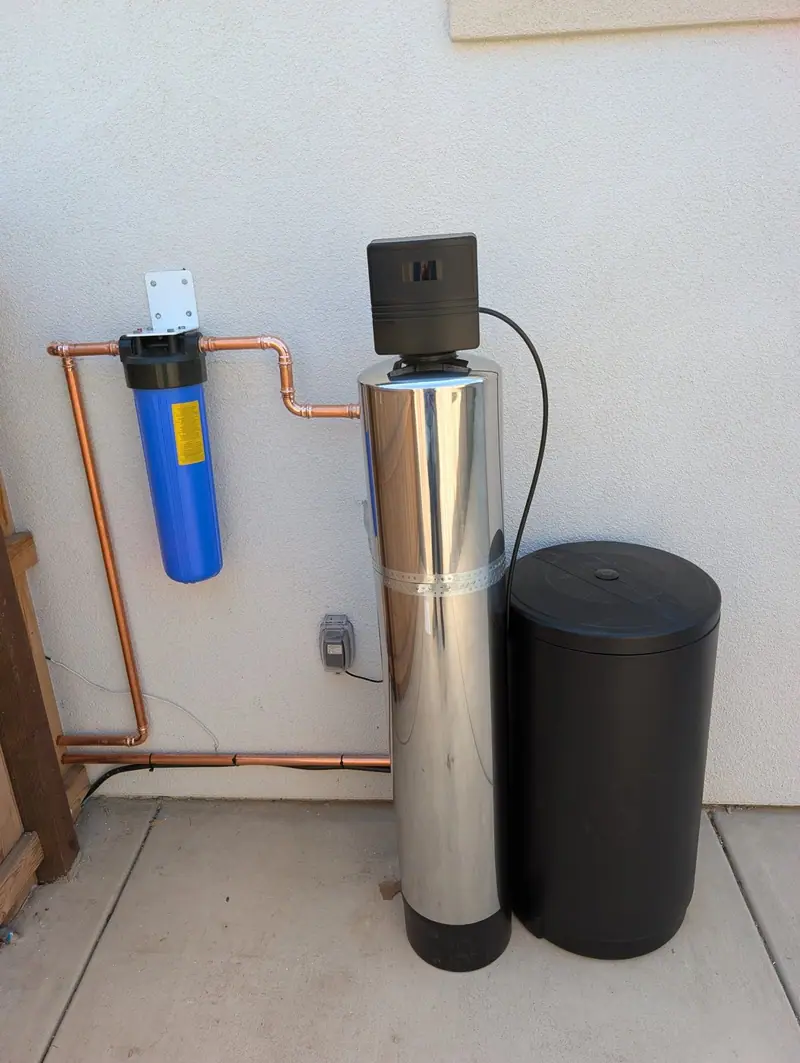
A standard water softener isn’t designed for TCP — it’s built for hardness — but we have specialty media options, and reverse osmosis with carbon stages for drinking water.
At the kitchen sink, families usually look at reverse osmosis systems that include activated carbon stages. Carbon is the technology the State Water Board points to for TCP at the utility scale; our home RO setups include carbon filtration as part of the train. We do not claim any home unit is certified specifically for TCP. We size NSF-certified components for drinking and cooking water, install them ourselves, and service them locally.
Depending on your results, options may include under-sink RO for the kitchen, pairing RO with a whole-house carbon filter for chlorine taste, or other combinations. We keep the menu practical — various options so you choose with numbers in hand, not a scare headline.
What that gives you
- Drinking water you’re proud to pour for coffee, cooking and kids.
- Less reliance on bottled water once the dedicated faucet is in.
- Straight talk about what the city already treats vs. what a home system adds.
- One local team for test, install and service — family-owned since 1996, CSLB C55 (California’s water conditioning contractor license) #811243.
- Financing through Enhancify on approved credit when you’re ready (OAC).
TCP questions near you
We help homeowners across the corridor: Manteca · Lathrop · Stockton · Patterson · Hughson · Turlock · Modesto.
Keep reading: TCP in Manteca Water: What It Means for Your Kitchen Tap
Browse all problems: Water problems hub
Related city RO guide: Reverse osmosis in Manteca
Our Promise
Tested before, tested after.
We test your water before we recommend anything, and we test it again after we install. If your results don't match what we showed you, we adjust the system until they do, at no charge.
Same team, start to finish.
The family-owned company that tests your water is the same one that builds, installs, and services your system. No call centers, no subcontractors. If something isn't right, call (209) 523-5921 and our own team comes back out.
No-pressure estimate.
Your water test is free and your estimate is in writing. No "today only" prices, no pressure. Compare us with anyone, and call when you're ready.
TCP (1,2,3-Trichloropropane): questions we hear
What is TCP in drinking water?
TCP stands for 1,2,3-trichloropropane. It’s a regulated contaminant in California drinking water. You can’t taste or smell it; reports and lab tests are how you know.
What is California’s TCP limit?
The MCL is 5 parts per trillion (ppt). Check which units your report uses (ppt, ng/L, or µg/L) before comparing.
Didn’t Manteca already fix TCP?
Manteca reports TCP treatment on affected wells was running by June 2025, with non-detect results in wells sampled after that in the 2025 CCR. City treatment is the big lever. Home RO is optional extra protection / taste / other contaminants — not a substitute for reading your current report.
Does a softener remove TCP?
A standard softener isn’t designed for TCP — it’s built for hardness. We have specialty media options, and reverse osmosis with carbon filtration for drinking water.
Does reverse osmosis remove TCP?
Our RO systems include activated carbon stages, and the State Water Board identifies GAC as best available technology for TCP at treatment plants. We don’t claim a home unit is certified for TCP. Ask us about testing and what a system can realistically do for your water.
Should private well owners test for TCP?
If you’re on a private well in farm or industrial-influenced areas, or you’ve never run a broad lab panel, it’s reasonable to ask a state-certified lab about TCP along with nitrate, arsenic and bacteria. We’ll help you choose a panel that matches your risk, not a kitchen-sink of every test on earth.
Will you re-test after install?
For health-related treatment, yes — tested before, tested after.
How do I get started?
Call Sales (209) 645-1151, office (209) 523-5921, or request a free water test.
Free Water Test + No-Pressure Estimate. Call (209) 523-5921 (office / scheduling) or (209) 645-1151 (sales). Licensed C55 contractor · CSLB #811243 · 30+ years · Family-owned since 1996.
Built to last: systems hand built in the USA with NSF-certified components. Warranty coverage is specific to the system we install; we’ll walk you through it in your estimate. Financing available, including 0% for 21 months on approved credit (OAC). See terms (opens in a new tab) Service: year-to-year service, or a service plan with service discounts and extended labor warranties.
Financing available
0% for 21 months
on approved credit (OAC) through Enhancify. See terms (opens in a new tab)
NSF certification applies to individual components, not the complete system.
Ready to Improve Your Water?
Start with a free water test. We’ll show you what’s in your water and recommend only what it calls for, with a clear, no-pressure estimate.
Financing available, including 0% for 21 months on approved credit (OAC). See terms (opens in a new tab)
Systems for this problem
Other water problems
Free water test / estimate
We reply during business hours (Mon–Fri, 9 AM–4 PM). Prefer to talk? Call (209) 645-1151.
Why book with us
- Licensed
- Bonded
- Workers' comp
- Liability
- Family-owned since 1996
- CSLB #811243
Office: (209) 523-5921
Sales: (209) 645-1151
Text: (209) 821-4777
Sources
Every number on this page links to its source. Sources were reviewed October 19, 2026.
Free Water Test + No-Pressure Estimate
Call (209) 523-5921 (office / scheduling) or (209) 645-1151 (sales), text (209) 821-4777, or message us online.
Contact Liquid Solutions Inc ★ Leave Us a Review